
- Portalprivado.com – What to Do in Porto: A First-Timer’s Guide to Must-Sees, Food, Views & Nightlife
- Portalprivado.com – What to Do in Lisbon: A First-Timer’s Guide to Iconic Sights, Local Neighborhoods, Food, and Evening Plans
- Portalprivado.com – How to Choose the Right Escort in Portugal: A Discreet, Safety-First Guide for First-Timers and Regulars
- Portalprivado.com – Private Suites vs. Serviced Apartments: Which Works Better for a Discreet Night (and Why)
- Portalprivado.com – Best Boutique Hotels for Privacy in Lisbon & Porto: A Discreet Catalog for a Private Evening
- Portalprivado.com – The luxury escort sector and the impact of technology
- Portalprivado.com – Top 10 Ranking of the Best Escorts in Parque das Nações, Lisbon
- Portalprivado.com – Top 10 Ranking of the Best Escorts in Parque das Nações, Lisbon
- Portalprivado.com – Innovation in Intimate Care: Discover Cristina Ferreira's new “Pippy”
- Portalprivado.com – Discover the top 10 escorts in Marquês de Pombal, Lisbon. Exclusive profiles for unforgettable experiences.
- Portalprivado.com – Top 10 Ranking of the Best Escorts in Saldanha, Lisboa
- Portalprivado.com – Top 10 Ranking of the Best Massage Therapists in Lisbon
- Portalprivado.com – Top 10 Ranking of the Most Requested Escort Services in Portugal
- Portalprivado.com – Escorts in Portugal: How to Choose Safely and Discreetly
- Portalprivado.com – Escorts in Portugal: How to Choose Safely and Discreetly
- Portalprivado.com – Top 10 Ranking of the Portuguese Preferred Sexual Positions
- Portalprivado.com – My evening with Diana Pereira from Portal Privado
- Portalprivado.com – Why Lisbon is the Perfect Destination to Book Luxury Escorts
- Portalprivado.com – Top 10 Ranking of the most expensive escorts in Portugal - They earn up to 10,000 euros in 2 days!
- Portalprivado.com – Top Escorts in Lisbon: Discover the Trends for 2025
- Portalprivado.com – The Best Escort Services in Portugal: What to Know Before Hiring
- Portalprivado.com – Top 10 Ranking of the Best Escorts in Porto
- Portalprivado.com – Top 10 Ranking best escorts in Lisbon
- Portalprivado.com – Tips for Choosing Escorts in Lisbon with Safety and Confidence
- Portalprivado.com – Gifts that make memories - Our suggestions
- Portalprivado.com – Discover Lisbon's Best Shops: An Unmissable Shopping Guide!
- Portalprivado.com – Lingerie brands that will transform your closet!
- Portalprivado.com – The best plans for this Fall!
- Portalprivado.com – The best plans for this Fall!
- Portalprivado.com – Lisbon like you've never seen it before!
- Portalprivado.com – Lisbon Escorts - Night Escape at the Dam
- Portalprivado.com – Lisbon Escorts - Muddy Lara Croft
- Portalprivado.com – Lisbon Escorts - Muddy Lara Croft
- Portalprivado.com – Lisbon Escorts - One Snake in Alentejo
- Portalprivado.com – Lisbon Escorts - One Snake in Alentejo
- Portalprivado.com – Mayhem in London
- Portalprivado.com – Discover 5 dream places to do glamping in Portugal
- Portalprivado.com – Discover the best gardens to have the perfect picnic in Lisbon
- Portalprivado.com – What to do in Porto during the weekend
- Portalprivado.com – 5 traditional restaurants not to be missed in the Algarve
- Portalprivado.com – 4 gyms in Lisbon to keep you fit all year round
- Portalprivado.com – Pousada Convento de Tavira: visit a neighborhood that is more than 700 years old
- Portalprivado.com – The 3 lubricants you really have to try!
- Portalprivado.com – Satisfyer – women's new best friend
- Portalprivado.com – What to do in Porto this weekend
- Portalprivado.com – No ideas for Christmas gifts? Discover the best sex toys to give
- Portalprivado.com – Top 10 Ranking of The best lingerie for New Year's Eve
- Portalprivado.com – Come and discover the new museum in Porto
- Portalprivado.com – Teaser Alert: Did you know that the Algarve is not only practiced in the summer?
- Portalprivado.com – Celebrating Bananas: A Sweet Blog Post
- Portalprivado.com – 'Happy, Handsome Boy' – A Romantic Satire
- Portalprivado.com – Lisbon, how I love you!
- Portalprivado.com – I took it, cracked it and put you on the list…
- Portalprivado.com – February starts with (j)oy
- Portalprivado.com – Tap lightly, lightly…
- Portalprivado.com – Saint Valentine in the heights
- Portalprivado.com – You are like music to my ears...
- Portalprivado.com – Happy Valentines Day
- Portalprivado.com – Don't leave for tomorrow where you can sleep today!
- Portalprivado.com – Even wolves howl...
- Portalprivado.com – Now give one here and then another!
- Portalprivado.com – Eat, drink, dance and repeat!
- Portalprivado.com – 25 degrees
- Portalprivado.com – (ALMOST) GOLD ON BLUE
- Portalprivado.com – BA-DEE-YA, DANCING IN SEPTEMBER
- Portalprivado.com – Samba foot on the floor, chopinho in hand!
- Portalprivado.com – rescue to the past
- Portalprivado.com – SANTOS POPULARES, THE QUEEN IS THE SARDINE!
- Portalprivado.com – Taquero Mucho: A Taste of Authenticity
- food(1)
- experience(9)
- glamping(1)
- weekend(2)
- escort(25)
- Comida(1)
- acompanhante-de-luxo(39)
- Setembro (3)
- Festival(1)
- fit(1)
- noite(4)
- noite(5)
- Algarve(4)
- escorts(19)
- Sugestões(2)
- sexshop(3)
- solteiros(2)
- Bares(2)
- gym(1)
- Presentes(1)
- toys(1)
- lubrificant(2)
- festival(0)
- model(5)
- Restaurantes(5)
- satisfyer(1)
- Sites de Confiança(2)
- Porto(17)
- acompanhante(25)
- luxury escort(16)
- Acompanhantes Lisboa(9)
- praias(2)
- gifts(1)
- festa(2)
- luxury escort algarve(2)
- Vinhos(1)
- produtos(1)
- lubricant(1)
- Hotel(0)
- casino(0)
- lisbon(4)
- Lisboa(8)
- tecnologia(1)
- spa(1)
- Tavira(1)
- sextoys(4)
- Oporto(3)
- call-girl(11)
- cascais(1)
- love(3)
- Ginásio(0)
- Alentejo(0)
- Golfe(0)
- Natal(1)
- fun(2)
- Dança(1)
- Beleza(3)
- Noite(0)
- Outono(0)
- Festa(0)
- Lingerie (0)
- moda(1)
- Brinquedos(1)
- portalprivado.com(10)
- Sustentável(1)
- Histórias do Portal Privado - Sessões Fotográficas(6)
- lingerie(2)
- swing(1)
- casais(2)
- wine(1)
- Albufeira(1)
- Restaurantes(3)
- Casino(0)
- Sessões Fotográficas(6)
- acompanhante_lisboa(33)
- gym(1)
- self-care(7)
- Mulheres(18)
- Hotel(3)
- Resort(1)
- acompanhantedeluxo(53)
- Sintra (2)
- produtos(1)
- natal(1)
- acompanhante(23)
- Lisboa(12)
- moda(2)
- Algarve(4)
- romantic(7)
- Gastronomia (1)
- oporto(9)
- glamping(1)
- Setembro (3)
- Brinquedos(3)
- Spa(1)
- em forma(1)
- model(4)
- Companion(7)
- Tenis(0)
- fun(3)
- Cascais(4)
- portalprivado(11)
- lisbon-escort(19)
- sex(6)
- girl(6)
- lisbon(5)
- acompanhante-porto(10)
- prazer(7)
- Christmas (2)
- sexuality(7)
- Portugal(10)
- blackfriday(1)
- Festival(0)
- Porto(13)
- Tavira(1)
- beautiful_girls(3)
- Estoril(0)
- Lingerie(1)
- companhia(8)
- Motogp(0)
- escorts(17)
- Solteiro(0)
- Golf(1)
- Vilamoura(1)
- Luxury escort(17)
- ginásio(1)
- presentes(1)
- wine(0)
- Histórias do PortalPrivado.com(6)
- weekend(1)
- food(1)
- Gift(1)
- Callgirl(11)
- Santos Populares(0)
- lubricant(1)
- acompanhantedeluxo(0)
- (0)
- Vilamoura(0)
- Cocktails(4)
- fit(1)
- sextoys(3)
- Clube(0)
- Vacation(3)
- Praia(3)
- Acompanhantes Portugal(3)
- portalprivado.com(19)
Private Suites vs. Serviced Apartments: Which Works Better for a Discreet Night (and Why)
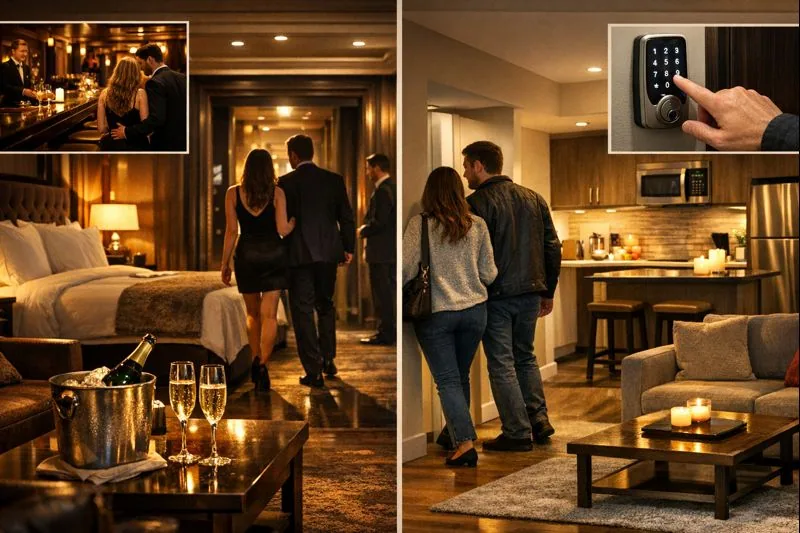
When your goal is a smooth, discreet, premium evening with an escort, your accommodation choice does more than set the backdrop. It determines how many “exposure points” you face (lobby, elevators, staff interactions), how much control you have over timing, and how comfortable the entire experience feels — from the first greeting to the last quiet moment.
This guide is built for real-world decision-making. No fluff, no awkward assumptions, and no city “best hotel” lists that overlap other articles. Instead, you’ll get a practical decision framework, comparison tables, checklists, and ready-to-run evening templates that match the intent of people who are actively searching for escorts and want everything to stay discreet, elegant, and uncomplicated.
Important: Always respect consent, personal boundaries, property rules, and local laws. This article focuses on comfort, discretion, and logistics — not on anything explicit.
1) The real decision: privacy, control, and friction
Most people book accommodation by price, photos, or star rating. For a discreet night, the real decision is about three variables:
- Privacy: How visible are you at the points that matter (check-in, corridors, shared spaces)?
- Control: Can you manage timing (arrival, breaks, late-night return) without unnecessary interactions?
- Friction: How many “small problems” can show up (visitor restrictions, key exchange, housekeeping knocks, noise complaints)?
Private suites (hotel suites) and serviced apartments can both work well. The “better” choice depends on the type of evening you want: a high-service premium loop with predictable support, or a low-touch, more autonomous setup that feels closer to a private residence.
2) Definitions: what you’re actually comparing
Private suite (hotel suite)
A private suite is typically a hotel category with a separate living area and bedroom (sometimes with two bathrooms), backed by hotel operations: staffed reception, standardized cleaning, security protocols, and often in-house amenities such as a bar, concierge, room service, and late-night entry systems.
Serviced apartment
A serviced apartment is a hybrid: apartment-style space (often a living room + kitchenette) with some level of hospitality service. Depending on the operator, check-in may be on-site, remote, or via a managed desk. Housekeeping may be daily, weekly, or on request. Policies vary widely — this is where people either win big on privacy or run into avoidable friction.
The 30-second takeaway
- Suites: predictable standards + support + “hotel ecosystem” (amenities and staff).
- Serviced apartments: autonomy + residential feel + often fewer staff touchpoints (but higher variability).
3) Quick decision matrix (TL;DR)
Use this table to identify your best fit in under two minutes. The goal is not “hotel vs apartment” in general, but “which one reduces your risk of awkward interruptions and increases control for your specific evening plan.”
Criteria | Private Suite | Serviced Apartment | Best for |
Check-in discretion | Predictable process, but visible lobby | Can be low-touch, but varies widely | Low-touch: serviced; predictable: suite |
Visitor/guest policy clarity | Usually explicit and enforceable | Sometimes unclear until late | Risk-averse: suite |
Staff touchpoints | More staff presence | Potentially fewer interactions | Minimal interaction: serviced |
Noise & neighbor risk | Often better sound handling | Depends on building + neighbors | Quiet reliability: suite |
Late-night entry | Typically seamless (24/7 desk or access) | Can be easy or painful (codes/keys/support) | Late returns: suite |
Amenities | Bar, lounge, concierge, room service | Kitchenette, living room, “home base” | Outing-first: suite; chill-first: serviced |
Cleanliness predictability | High and standardized | Variable by operator | Zero surprises: suite |
Support if something breaks | Fast response | Depends on operator availability | High-stakes evening: suite |
Total cost transparency (1 night) | Often simpler | Fees/deposits can change the math | One-night stays: suite often wins |
4) Privacy engineering: where discretion is won or lost
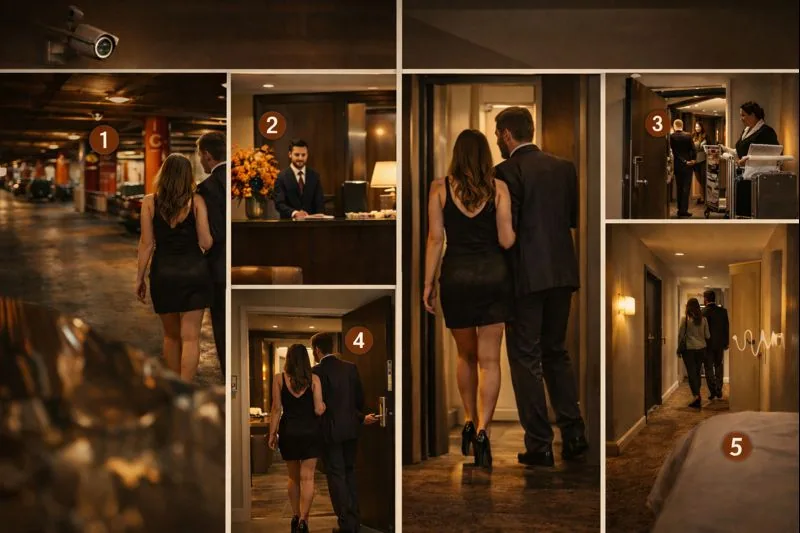
Discretion is not one big decision — it’s a chain of small moments. The more you reduce unnecessary “exposure points,” the more relaxed the evening feels. Here are the places where people typically underestimate visibility:
- Check-in window: lobby traffic, staff interactions, waiting time.
- Access path: parking → entrance → elevator → corridor → room.
- Housekeeping interrupts: knocks, service checks, corridor activity.
- Noise and neighbor sensitivity: thin walls, shared floors, quiet-hour enforcement.
Suites: predictable, but more “public” touchpoints
A private suite often means a visible lobby — but the tradeoff is operational predictability. You know where the front desk is, how access works, and what support looks like if you need it. If your priority is “no surprises,” this reliability is hard to beat.
Serviced apartments: potentially lower visibility, higher variance
A serviced apartment can reduce staff touchpoints — especially with remote check-in or self-access. But discretion depends on the building: residential neighbors, concierge rules, elevator exposure, and the operator’s responsiveness if anything goes wrong. The best serviced apartments feel like a controlled private residence. The worst feel like improvisation.
Privacy Checklist (book before you commit):
- Is the guest/visitor policy clearly stated and compatible with your plan?
- How does check-in work (staffed desk, remote verification, key pickup, access codes)?
- What is the housekeeping schedule (daily, on request, fixed hours)?
- Do you have a quiet, direct access path (parking proximity, elevator access, minimal lobby time)?
- Is there reliable late-night entry and support if a code/key fails?
5) Visitor policy: the fastest way to turn a premium night into friction
People assume “a room is a room.” In reality, many properties operate under strict guest registration rules, visitor limitations, or extra guest fees. If you ignore this, you’re not buying discretion — you’re buying uncertainty.
The right approach is simple: choose a property whose policy matches your plan. Discretion comes from compatibility, not from trying to force a setup that doesn’t fit.
How to evaluate policy without drama
- Look for explicit language about registered guests, visitors, and additional occupant fees.
- Prefer properties that provide clear rules and consistent enforcement (predictability is peace of mind).
- Avoid “grey zone” listings where rules are vague until after booking.
If discretion is your priority, clarity is your friend. The most confident, premium experience is one where you never need to negotiate basic access.
6) Comfort, pacing, and “premium feel”: what matters for the actual evening
Discretion is only half the goal. The other half is creating a comfortable rhythm: a natural flow of conversation, reset moments, and a setting that feels intentional rather than improvised.
Why suites often feel “made for hosting”
- Two-zone layout: a living area reduces awkwardness and gives you pacing options.
- Service on demand: room service, concierge support, late-night assistance.
- Shared-space advantage: a hotel bar or lounge can be a seamless, neutral meet point.
Why serviced apartments can feel more relaxed
- Residential tone: a “home base” feel that’s less formal.
- Space for long conversation: living rooms can be larger than many standard hotel rooms.
- Control of environment: kitchenettes, seating, lighting options (depending on the unit).
If you prefer an outing-first evening (cocktail → dinner → late return), suites usually win on flow. If you prefer a quiet, conversation-heavy evening with fewer transitions, serviced apartments can be excellent — if the building and operator are strong.
7) Safety and support: discreet, practical, and calm
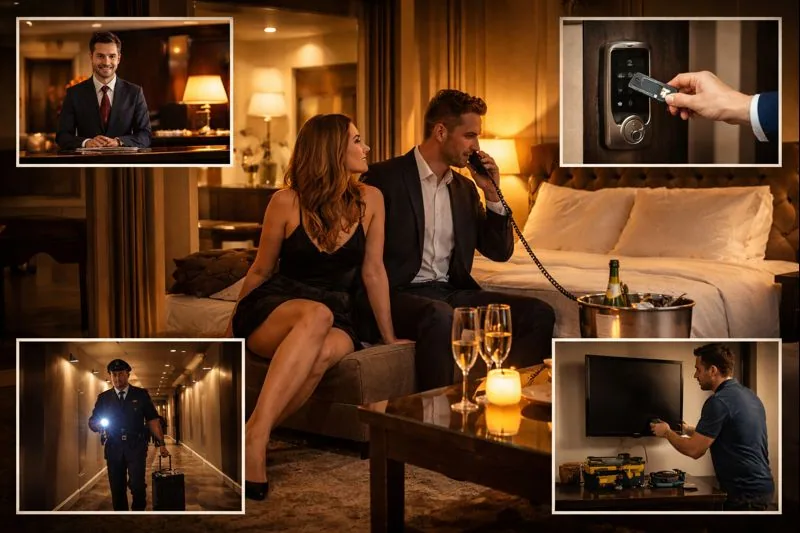
A premium night should feel calm. That calm often comes from “support infrastructure” — the confidence that small issues won’t become problems.
Where suites are typically stronger
- 24/7 access logic: late returns are routine.
- Immediate assistance: lost key cards, noise issues, room problems.
- Controlled entry: more predictable access management.
Where serviced apartments can be stronger
- Lower staff visibility: fewer interactions can feel more discreet.
- Residential blending: less “hotel theater,” more private rhythm.
The golden rule: choose the option that gives you confidence without forcing you to “figure things out” at the last minute. Discretion is not secrecy — it’s smoothness.
8) Cost reality: one-night math vs two-night logic
On a one-night plan, your goal is not maximizing square meters. Your goal is minimizing friction. That’s why suites often win the one-night equation: fewer hidden fees and fewer operational constraints.
Cost clarity checklist
Cost item | Private Suite | Serviced Apartment | What to watch |
Nightly rate | Higher on average | Can be lower | Compare like-for-like: location, quality, support |
Cleaning fees | Often included | May be added | One-night stays can be penalized by fees |
Deposit / hold | Sometimes minimal | More common | Know the amount and release timing |
Late check-out | Negotiable, often available | Depends on operator | Morning comfort matters if you stay overnight |
Extra guest fee | Policy-based, explicit | Can be unclear | Clarity reduces awkward moments |
If you’re staying two nights, serviced apartments become more attractive: fees amortize, and “home base” benefits add value. If you’re planning one night, suites often deliver the cleanest, least surprising total experience.
9) Scenario-based recommendations (choose the right tool for the night)
This is the quickest way to decide. Pick the scenario that matches your plan and book accordingly.
Scenario A: Dinner + drinks + late return (minimal friction)
Best choice: Private suite.
- Late-night entry is routine.
- Staff support reduces “small problems.”
- Hotel bar/lounge can make meeting and transitions smoother.
Scenario B: Privacy-first, low visibility, short evening
Best choice: High-quality serviced apartment (with clear rules).
- Lower staff touchpoints can feel more discreet.
- Residential tone supports a relaxed pace.
- Works best when check-in and access are truly reliable.
Scenario C: Overnight + slow morning (comfort and space matter)
Best choice: Serviced apartment or a true suite (two-zone layout).
- Space improves pacing and morning comfort.
- Late check-out flexibility becomes a bigger factor.
Scenario D: High-profile discretion (you want the least “memorability”)
Best choice: It depends — choose the option with the fewest exposure points and the clearest policy fit.
- If the serviced apartment has remote check-in, strong access control, and clear rules, it can be ideal.
- If you want guaranteed support and a controlled operation, a suite can be safer.
Scenario E: Last-minute booking (time is the constraint)
Best choice: Private suite.
- Predictable check-in.
- Less dependence on “someone answering messages” for keys/codes.
10) How to spend the evening: premium, discreet templates that actually work
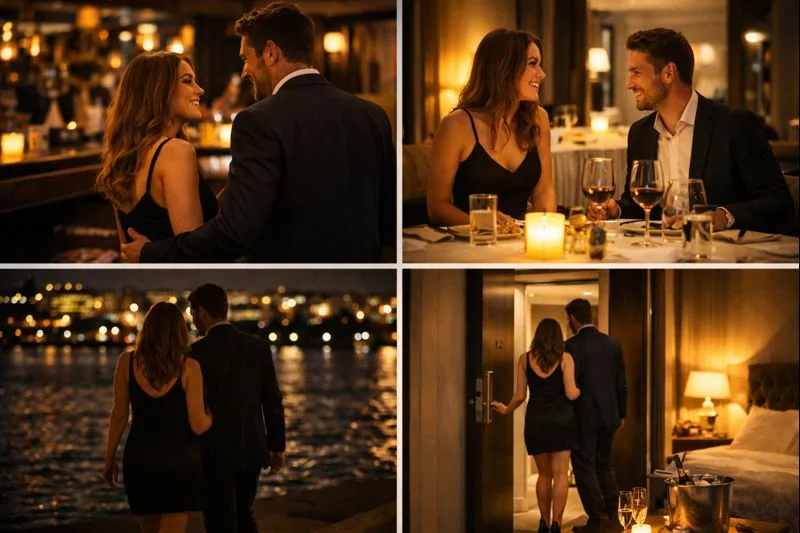
A discreet night goes best when it feels intentional, not rushed. The key is to build a simple structure: a clean meeting moment, one strong venue choice, and a smooth return — without stacking too many locations or unnecessary attention. Below are templates that fit different personalities and comfort levels.
Template 1: The Classic Premium Loop (3–5 hours)
- Meet with a clear arrival plan: Choose a simple meeting point that avoids “waiting around” in crowded chokepoints.
- One high-quality drinks stop: A calm lounge environment sets the tone and makes conversation easy.
- Dinner with pacing: Avoid overly loud places where you end up leaning in and repeating everything.
- Short “reset” moment: A brief walk or quiet view point helps the evening feel curated.
- Return smoothly: Taxi/ride-hail beats complex transit late at night; fewer transitions equals less friction.
Best accommodation match: Private suite (especially if you want late-night entry to be effortless and predictable).
Template 2: The Discreet Reset Loop (low visibility, minimal transitions)
- Meet near the final destination: Reduce travel time together to keep the evening calm and controlled.
- Quiet wine bar or intimate café: Choose “conversation-friendly” rather than “scene-heavy.”
- One focused highlight: Dessert or a second drink in the same area — no venue hopping.
- Return without delay: The fewer public transitions, the more discreet the night feels.
Best accommodation match: Serviced apartment (when access and policies are clear) or a suite if you prefer higher operational support.
Template 3: The Suite Night (in-room comfort, zero chaos)
This template is for people who want a calm premium evening without turning it into a public tour. The goal is to create a comfortable environment that feels intentional and respectful.
- Curate the atmosphere: comfortable temperature, soft lighting, and a clean, uncluttered space.
- Keep it simple: one well-chosen drink option (including non-alcoholic), light snacks, and a relaxed pace.
- Protect the vibe: no surprise guests, no loud calls, no chaotic playlists, no unnecessary interruptions.
- Respect boundaries: the best nights are built on clear communication and comfort, not pressure.
Best accommodation match: Private suite (two-zone layout helps pacing and avoids the “everything happens in one small space” feeling).
City-ready variations (without turning into a “best hotels” list)
The accommodation decision stays the same in any city: choose the option that reduces exposure points and fits your schedule. What changes is the rhythm — how busy certain areas get, how easy it is to move discreetly, and how predictable late-night returns are.
Lisbon variation: keep transitions clean and plan your reset
Lisbon evenings can move fast — crowds, hills, and timing all matter. If you’re planning a premium loop (cocktail → dinner → return), a suite often keeps things frictionless. If you prefer a low-visibility, minimal-transition plan, a strong serviced apartment can be excellent. If your main intent is to browse options first and build the evening around availability, start with escorts Lisbon and then match the accommodation format to your preferred pace (outing-first vs private-base).
Porto variation: compact city, but don’t underestimate late-night logistics
Porto can feel smaller, which makes people over-stack the itinerary. The better play is a tight loop: one strong venue choice and a clean return. Suites tend to win when you want late-night access and support to be automatic. Serviced apartments can work beautifully when the building is quiet and policies are clear. If you’re choosing plans based on who you want to meet first, browse escorts Porto and build an evening that minimizes transitions and maximizes comfort.
11) Common mistakes (and the better move)
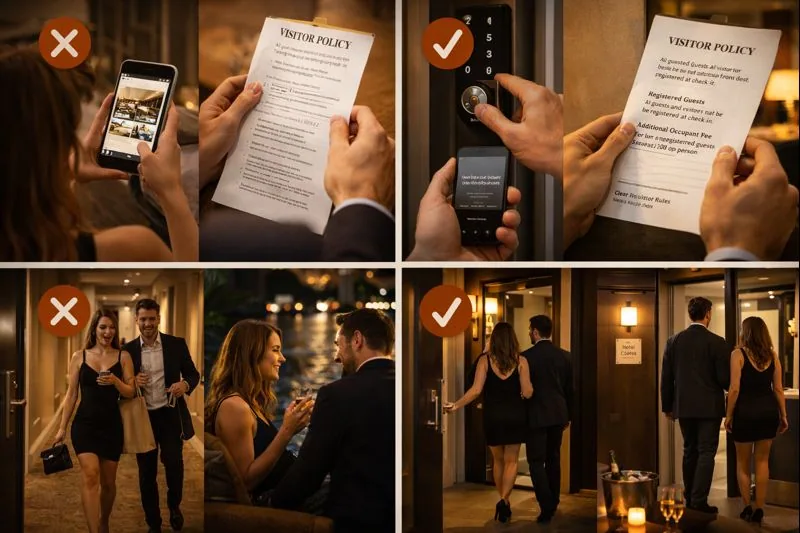
These mistakes happen because people optimize for the wrong thing (photos, price, novelty) instead of optimizing for smoothness. Use this table to avoid the usual traps.
Mistake | Why it happens | Better move |
Booking based on photos only | Listings look premium, policies are ignored | Verify visitor rules, check-in method, housekeeping schedule |
Assuming “serviced apartment = no rules” | People confuse autonomy with zero policy | Choose properties with explicit, compatible policies |
Over-planning the night | FOMO and too many transitions | One great venue + one reset moment + smooth return |
Ignoring late-night access | Daytime check-in logic doesn’t match reality | Prioritize 24/7 access support or proven self-entry |
Taking “quiet” for granted | Noise varies wildly by building | Suites for predictability; serviced apartments only when building quality is known |
Conclusion: the simplest rule-of-thumb
If you want the most reliable, least surprising option for a discreet night with an escort, a private suite is usually the safer default: predictable check-in, standardized comfort, and support when something small goes wrong.
If you value autonomy and a residential feel — and you have a serviced apartment with clear policies, reliable entry, and strong building quality — it can deliver excellent discretion with fewer touchpoints.
Either way, the winning strategy is the same: optimize for smoothness. When the logistics are calm, the evening can be calm.
FAQ (practical answers, no awkwardness)
Is a serviced apartment always more private than a suite?
Not always. A serviced apartment can reduce staff interactions, but privacy depends on building layout, neighbor sensitivity, access control, and policy clarity. A suite is more “public” at check-in, but often more predictable and supportive.
What matters most for a one-night plan?
Minimize friction: clear visitor policy, reliable check-in/access, and a setup that supports your timing. For one night, predictability often beats extra space.
What’s the best option if I expect a late return?
Suites usually win because late-night entry and support are standard. Serviced apartments can work if self-entry is truly reliable and there’s real support if something fails.
How do I keep the evening discreet without overthinking it?
Reduce transitions. Choose one quality venue, avoid crowded chokepoints, keep timing simple, and select accommodation that matches your plan instead of fighting its policies.
What makes a night feel “premium” without being flashy?
Comfort and pacing: a calm setting, no chaos, respectful communication, and a predictable environment. The best premium nights feel effortless, not complicated.
Is a private suite better for first-time meetings?
Often, yes — because suites reduce uncertainty. Predictable operations, clear access logic, and support infrastructure can make the entire experience feel more controlled and calm.